Dappled Forest Minecraft: A Complete Guide to the New Autumn Biome
Minecraft continues to expand its Overworld with new environments, resources, structures, and exploration opportunities, and the Dappled Forest is one of the most distinctive forest biomes introduced during the 2026 development cycle. Designed around an autumn-inspired atmosphere, the Dappled Forest gives players a completely different visual experience from traditional green forests. Instead of relying on a single leaf color, the biome combines red, orange, and yellow Poplar Leaves, creating a colorful woodland landscape filled with falling leaves, fallen trees, mushrooms, shrubs, and wildlife.
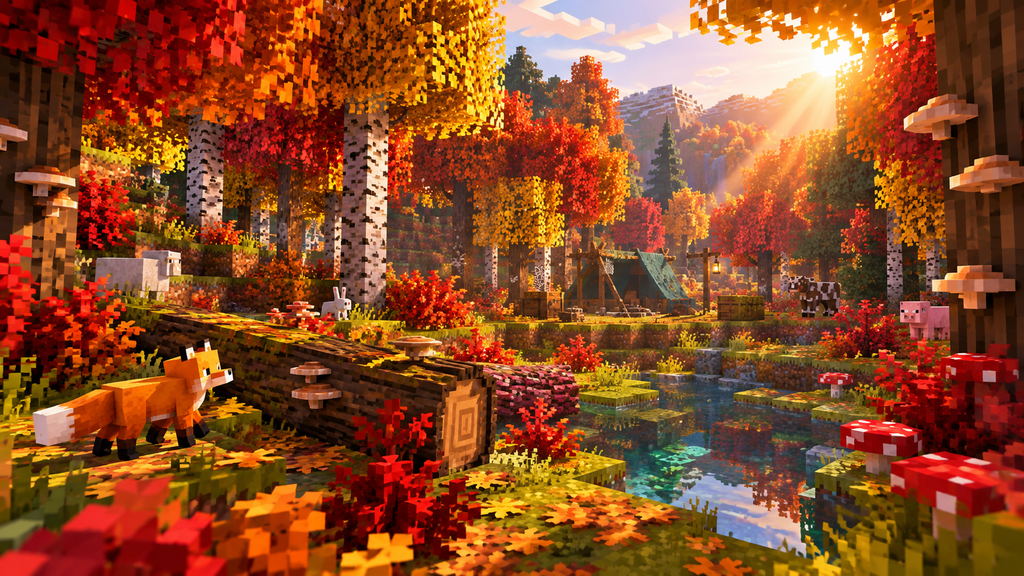
The Dappled Forest is more than just a visually attractive biome. It introduces a collection of new natural features and materials that can be useful for both survival players and creative builders. Poplar Trees provide a new wood type, while Shelf Mushrooms and Red Shrubs add additional decorative possibilities. The biome can also contain wildlife and an Abandoned Camp structure, giving explorers additional reasons to travel through the area.
What Is the Dappled Forest in Minecraft?
The Dappled Forest is a new Overworld forest biome associated with colder regions. Its most recognizable feature is the Poplar Tree, which can appear with red, orange, or yellow leaves. These different colors give the biome a permanent autumn-like appearance and make it easy to distinguish from many of Minecraft’s traditional forests.
The biome is designed to feel like a naturally developing woodland rather than simply being a collection of colorful trees. Players can encounter standing Poplar Trees, fallen trees, vegetation, mushrooms, animals, and structures while exploring. This combination gives the Dappled Forest a unique identity and makes it particularly interesting for players who enjoy discovering new areas.
The Autumn Appearance of the Dappled Forest
The visual identity of the Dappled Forest is strongly connected to autumn. Poplar Trees generate with red, orange, and yellow foliage, creating a colorful canopy above the forest floor. Falling-leaf particles add movement to the environment and make the forest feel more alive.
The mixture of colors also makes the biome particularly attractive for screenshots, videos, and Minecraft building projects. Players can use the naturally generated landscape as a background for cabins, campsites, pathways, villages, bridges, and other structures.
Poplar Trees and the New Wood Set
Poplar Trees are the main natural resource associated with the Dappled Forest. They can generate with different leaf colors and may also appear as fallen Poplar Trees. Their logs can be collected and used to create the new Poplar wood set.
The introduction of another wood type gives Minecraft builders more creative freedom. Poplar materials can be combined with stone, bricks, glass, existing wood types, and other blocks to create different architectural styles. Players can also collect Poplar Saplings and grow their own trees near their bases.
One particularly interesting feature is that Poplar Saplings can grow into different Poplar Tree variants. This makes them useful for creating colorful custom forests without requiring players to find every tree variation separately.
Fallen Poplar Trees Add Natural Detail
Fallen Poplar Trees are another environmental feature that makes the biome different from ordinary forests. Instead of having every tree standing vertically, some trees can appear lying across the forest floor.
These fallen trees make the environment feel more natural and can also become useful decorative elements. Players creating adventure maps or custom survival bases can use fallen-tree areas as inspiration for trails, campsites, forests, and wilderness scenes.
Shelf Mushrooms can also generate on Poplar Trees and fallen Poplar Trees, creating a connection between the different natural features of the biome.
Shelf Mushrooms in the Dappled Forest
Shelf Mushrooms are one of the interesting decorative features associated with the Dappled Forest. They can grow on Poplar Trees and fallen Poplar Trees and are available in small and large forms.
Players can use Bone Meal on a small Shelf Mushroom to grow it into a large one. This provides builders with another unusual natural block that can be incorporated into forest-themed builds and decorative landscapes.
Shelf Mushrooms also have an interesting physical interaction. They have a slight bouncing behavior when entities interact with them, giving the block an additional gameplay feature beyond its appearance.
Red Shrubs and Forest Vegetation
Red Shrubs provide additional color to the forest floor. Their red appearance works naturally with the autumn-colored Poplar Leaves above them, helping create a complete seasonal environment.
Players can use Red Shrubs for landscaping around houses, pathways, gardens, campsites, and other structures. Bone Meal can also be used to encourage their growth, making them practical for players who want to reproduce the Dappled Forest appearance somewhere else.
Wildlife in the Dappled Forest
The Dappled Forest is populated with different passive and neutral animals. Players may encounter Sheep, Chickens, Cows, Pigs, Rabbits, and Foxes while exploring the biome.
These animals make the forest feel more alive and also provide useful survival resources. Cows can provide leather and food, Sheep provide wool, Chickens can provide eggs and food, while Pigs can be an additional food source. Rabbits and Foxes contribute to the natural atmosphere of the woodland.
For survival players, the combination of wood, plants, wildlife, and other resources can make the Dappled Forest an interesting location for establishing a temporary camp or even a permanent base.
Image 2 — Dappled Forest Environment and Exploration
The Abandoned Camp Structure
Another major feature connected with the Dappled Forest is the Abandoned Camp. This structure provides an additional exploration objective for players who discover the biome.
The Dappled Forest version of the Abandoned Camp is designed to fit naturally into its autumn surroundings. Players can explore the structure and search containers such as chests and barrels for potential loot.
The structure also contributes to Minecraft’s environmental storytelling. Discovering an abandoned campsite in the middle of a colorful forest can encourage players to imagine the history behind the location and create their own stories around it.
How to Find the Dappled Forest
Finding a particular biome naturally can take time because Minecraft’s world generation depends on the world seed. Players searching for the Dappled Forest should explore areas around colder Overworld biomes because the Dappled Forest is associated with cold regions.
Players using commands can also use Minecraft’s biome locating system to search for a specific biome. This can make the process much faster when commands are available.
For players playing traditional Survival without commands, exploration remains the main method. The easiest way to recognize the biome is by looking for its distinctive red, orange, and yellow Poplar Trees.
Resources to Collect
Players visiting the Dappled Forest should consider collecting Poplar Logs, Poplar Saplings, Shelf Mushrooms, and Red Shrubs. Poplar Logs are particularly valuable because they provide access to the new wood set.
Saplings are also important because they allow players to establish Poplar Trees close to their own base. Collecting several saplings during the first visit can save players from needing to travel back to the biome later.
Shelf Mushrooms and Red Shrubs are useful for decoration and landscaping. Players interested in building detailed forest environments can collect these blocks and use them to recreate the appearance of the biome around their own structures.
Dappled Forest for Minecraft Builders
The Dappled Forest offers excellent possibilities for creative builders. Its natural autumn colors can serve as the foundation for many different building styles.
A small wooden cabin surrounded by colorful Poplar Trees can create a cozy survival environment. Larger projects could include autumn villages, forest lodges, mountain cabins, campsites, bridges, parks, and fantasy settlements.
The three main Poplar leaf colors can also be used creatively. Builders can arrange red, orange, and yellow trees in specific patterns to create colorful pathways or decorative gardens.
Dappled Forest for Survival Players
For Survival players, the biome provides a combination of renewable wood, vegetation, wildlife, and exploration opportunities. The presence of animals means players can find useful food and materials while exploring.
The biome can also make an attractive permanent base location. A house surrounded by Poplar Trees can have a distinctive appearance throughout the world, particularly when combined with paths, lanterns, farms, and other decorative elements.
Players should still prepare before making a long journey. Food, tools, weapons, torches, beds, and extra storage can be useful when searching for a distant biome.
Why the Dappled Forest Is Important
The Dappled Forest adds another visual and gameplay option to Minecraft’s already diverse Overworld. Instead of introducing only a different tree color, the biome combines trees, fallen logs, mushrooms, shrubs, wildlife, and structures into one connected environment.
This makes exploration more rewarding because players can discover several different features during the same journey. Builders gain new materials and scenery, while survival players gain additional resources and potential locations for bases.
Tips for Exploring the Dappled Forest
Before traveling to the Dappled Forest, players should decide what they want to collect. Builders may want to prioritize Poplar Logs and Saplings, while explorers may focus on finding the Abandoned Camp and examining the surrounding environment.
Players should also keep enough inventory space available. If the goal is to establish a Poplar Tree farm at home, collecting several saplings is recommended. Bringing Bone Meal can also be useful for growing plants and trees after returning to the base.
Taking screenshots of the biome can be worthwhile as well. The combination of autumn-colored leaves, fallen trees, shrubs, mushrooms, and wildlife creates a distinctive Minecraft landscape.
Final Thoughts
The Dappled Forest is a colorful and distinctive addition to Minecraft’s Overworld. Its red, orange, and yellow Poplar Trees immediately give it a strong autumn identity, while fallen trees, Shelf Mushrooms, Red Shrubs, wildlife, and the Abandoned Camp add additional depth to the environment.
For builders, the biome provides new materials and a beautiful natural setting. For survival players, it offers useful resources and potential base locations. For explorers, it provides another reason to travel beyond familiar areas and discover new parts of the Minecraft world.
As Minecraft continues to develop, individual features can change during snapshots and preview versions before reaching a final release. Players should therefore check official Minecraft announcements and changelogs when exact feature availability is important. Nevertheless, the Dappled Forest represents an exciting direction for Minecraft’s Overworld and gives players a fresh autumn-inspired environment to explore, build in, and enjoy.